
December 11, 2025
This week is a flurry of events, not only in the immigration system but in the country as a whole, what with the new laws passed early this month, forecasts for forthcoming Express Entry draws, the establishment of citizenship accessibility guidelines, increased fees to restore status, and a case of misrepresentation through marriage fraud. Read on…
Canada passed new laws in December 2025
Federal travel privileges, new workplace leave rights, reinforced narcotics control, and important municipal tax obligations in Toronto have been implemented starting this year-end.

Travel Benefits:
The federal government is bringing back the Canada Strong Pass to help boost regional tourism, provide holiday travel relief costs, and encourage families to explore Canada’s attractions. This program includes free admission to Parks Canada national parks and historic sites, discounts on campsite fees and sleepovers, free or reduced entry fees at select art galleries and museums, and free or discounted VIA Rail travel within the country.
New Regulated Workplace Leave Rights:
The recent amendments to the Canada Labour Code to take effect on December 12, 2025, strengthen employee rights and support for workers dealing with loss while ensuring job tenure. Workers on extended leave can return to the same or similar work assignment after their absence, continue to enjoy benefits during leave, be updated on employment opportunities, and change the length of their leave with appropriate notice.
Imposition of Permanent Controls on Carisoprodol:
Carisoprodol, a sedative drug, is often combined with opioids, which makes it a health risk. Permanent controls for the possession, sale, or distribution of the drug allow border authorities to conduct more thorough inspections, impose stronger punitive measures, and help the country’s regulations to be in par with global drug-control benchmarks.
Important update for Canadian homeowners:
All homeowners are required to declare occupancy of their property from January 1 to December 31, 2025, through Toronto’s declaration portal for the 2025 Vacant Home Tax (VHT). The due date is April 30, 2026. Owners who do not declare occupancy for their property are liable for having their home automatically considered vacant, prompting the tax. This levy is part of the city’s efforts to increase housing supply and limit undetermined property vacancies.
Being updated allows Canadians to avail themselves of new programs, avoid punitive fees, and be aware of the future implications of this month’s changes in the country’s laws.
Next Express Entry draw and CRS score forecasts
What is the number of ITAs predicted in the upcoming Express Entry draw? The expected number of ITAs is dependent on the group IRCC selects. Current data evidence a clear tendency: French draws issued between 4,500 and 6,000 invitations, CEC rounds have persistently given out 1,000, and PNP draws distributed invites from fewer than 300 to nearly 800. These trends give a picture of this month’s upcoming invitations that will likely be within similar scopes based on the category chosen.
French rounds are likely to be a constant source for high-volume invitations, CEC draws are seen to maintain their steady pace, and PNP selections will continue to have increased CRS thresholds. Healthcare, education, and trades groups also continue to be strong contenders for the year-end activity.
The momentum and composition of recent draws provide a clear basis for realistic forecasts, but the final weeks of the year may still bring unexpected directions as IRCC considers various category priorities.
Canada sets up 8 major citizenship accessibility guidelines
The following eight new accommodation instructions were posted on December 2, 2025, for the IRCC staff to implement, namely the:
- Citizenship Test Accessibility Updated
- Updated Procedures for Oral, Large-Print, and Braille Tests
- New Rules for Knowledge and Language Hearings
- Accessibility Measures at Citizenship Ceremonies
- Updated Policy on Accompanying Persons
- Stricter Criteria for Interpreters
- Clear Rules for Applicants Unable to Act on Their Own Behalf
- Updated Rules for Taking Affidavits and Declarations
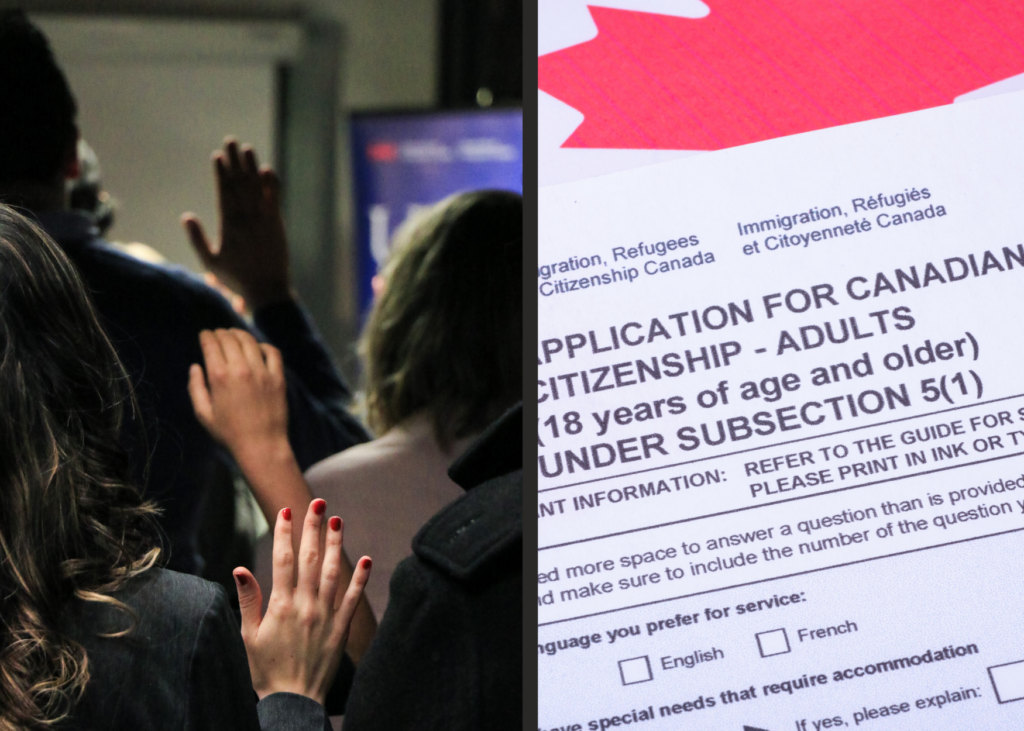
The aforementioned new framework applies to every aspect of the citizenship journey, including documentation, tests, ceremonies, hearings, interpreters, and guardianship. This makes sure that applicants can ask for accessibility assistance at any point in the process and that IRCC staff must use appropriate accommodation procedures included in subsection 5(3.1) of the Citizenship Act.
These changes reinforce procedural equity, assure fair access, and define how staff should carry out interpretation, accommodation, and humanitarian exemptions.
IRCC increases fees to restore Canadian status
Immigration, Refugees, and Citizenship Canada (IRCC) has increased its immigration fees effective this month, which includes several immigration categories, namely status restoration, inadmissibility applicants, and International Experience Canada (IEC). Said increases, however, do not affect all immigration applications, only the aforementioned.
An extension is applied for before a permit lapses, allowing the candidate to maintain status while IRCC acts on his application. Restoration is only needed when the status has already expired and does not permit continued study or work while processing.
Status restoration is a way to allow students, workers, or visitors on temporary status who unknowingly forfeited their legal status to apply to reclaim it without immediately leaving the country. It is only allowed within 90 days of losing status and necessitates possessing the eligibility requirements for the worker, student, or visitor category being restored.
After 90 days of losing one’s status, restoration is no longer possible. One is required to leave Canada and reapply from outside the country without status after the 90-day period may result in enforcement procedures or future inadmissibility problems.
Recent immigration case spotlights “Cash-for-Marriage” scam
In a court ruling issued in November, the Superior Court of Justice reported how Ontario resident Amratpal Singh Sidhu confessed to being involved in various fake marriages in India for the women to have an opportunity to immigrate to Canada, in exchange for cash and care for an ailing parent.
Federal legal resources label these arrangements “marriages of convenience” or marriage fraud: relationships created so the foreign partner can acquire permanent residence, rather than to build a real life together. It is a form of misrepresentation that can lead to a deprivation of status, removal from Canada and even prosecution for those guilty of the crime.
For genuine couples, the case in point of a “cash-for-marriage” scheme and many other similar cases of fraud had precipitated added scrutiny by officers, especially in instances where there is a complicated relationship record, long periods of separation of the couple, or former sponsorships. The challenge for this government is to go after those who make spousal sponsorship a business without treating genuine couples unfairly.
Be updated with immigration trends and avoid the pitfalls of the application process by employing our assistance at Lifeline Immigration! Our professional team with considerable years of experience and expertise in immigration consultancy, will guide you into appropriate pathways to help make your dream of making Canada your home, within reach! Get assessed now…